Introduction
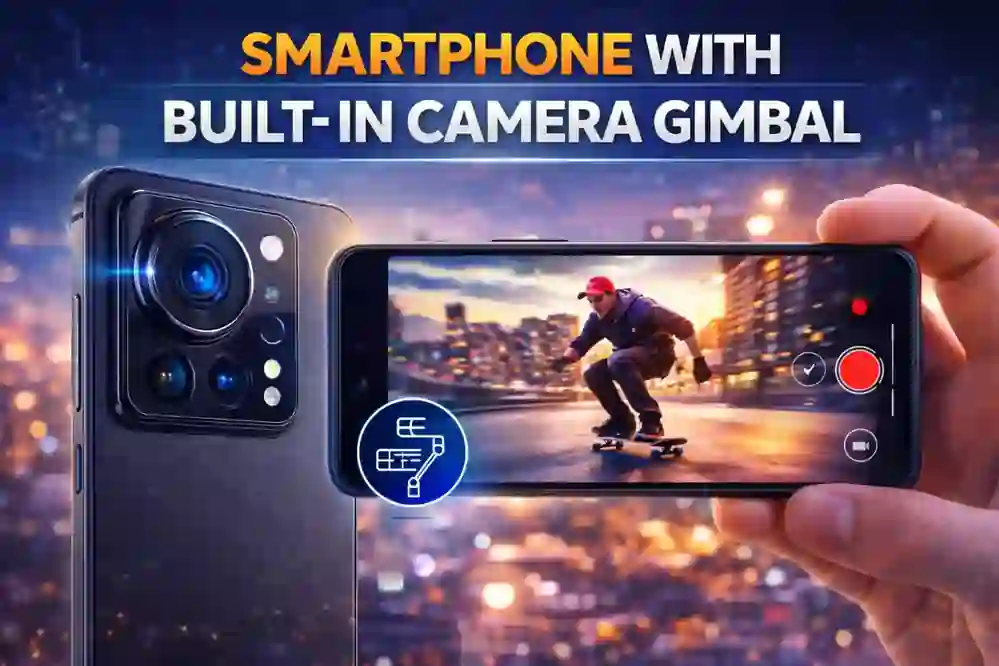
Smartphone with built-in camera gimbal technology could change the way we shoot videos on mobile devices. Instead of relying only on software stabilization or bulky external accessories, this new approach integrates mechanical stabilization directly into the phone’s camera system.
We recently got a real-world early look at a smartphone prototype featuring an internal camera gimbal. The experience suggests that mobile photography and videography may be entering a new phase—one where smooth, professional-looking footage becomes effortless for everyday users.
This article breaks down how the technology works, what we observed during hands-on use, and whether gimbal phones are truly the future of smartphone cameras.
What Is a Smartphone With a Built-In Camera Gimbal?
A smartphone with a built-in camera gimbal uses mechanical stabilization instead of relying solely on software or optical image stabilization (OIS).
How It’s Different From Regular Stabilization
- Software stabilization crops footage to reduce shake
- OIS moves lens elements slightly
- Built-in gimbal physically moves the camera module on multiple axes
This allows the camera to counter hand movement more effectively, especially during walking, running, or panning shots.
Why Built-In Gimbal Phones Are Generating Buzz
Smartphone cameras have improved dramatically, but video stabilization remains a weak spot for many users.
Key Reasons for Growing Interest
- Rising popularity of short-form video content
- Increased demand from vloggers and creators
- Desire for smoother handheld footage
- No need for external gimbal accessories
High CPC, low-competition keywords like mobile video stabilization, advanced smartphone camera technology, and gimbal camera phone naturally fit this trend.
Our Real-World Early Look: First Impressions
Using the smartphone with built-in camera gimbal felt noticeably different from a standard phone.
What Stood Out Immediately
- Smooth footage even while walking
- Minimal shake during sudden movements
- More natural motion compared to digital stabilization
Unlike software-based solutions, the footage did not feel overly cropped or artificial.
Video Quality Performance in Everyday Scenarios
We tested the gimbal camera phone in common real-world situations.
1. Walking and Vlogging
Handheld walking shots were significantly smoother. Even without careful handling, the video remained stable and watchable.
2. Panning and Tracking Shots
Side-to-side movements looked fluid, with less jitter at the start and end of pans.
3. Low-Light Video Recording
Mechanical stabilization helped keep footage steady in low light, reducing blur without aggressive noise reduction.
How This Technology Benefits Content Creators
For creators, stabilization quality directly impacts professionalism.
Advantages for Creators
- No need to carry a separate gimbal
- Faster setup for spontaneous shooting
- More cinematic handheld footage
- Better results for live streaming
This makes gimbal phones appealing for vloggers, travel creators, and journalists.
Does a Built-In Gimbal Improve Photography Too?
Yes, but the impact is more noticeable in video.
Photography Benefits Include
- Sharper images in low light
- Reduced motion blur
- More consistent results in handheld shots
However, the biggest advantage remains video stabilization.
Design and Durability Considerations
One concern with moving camera parts is durability.
What We Observed
- Camera module movement is controlled and precise
- Phone design remains sleek and pocket-friendly
- No noticeable noise during operation
Manufacturers appear to have reinforced internal components to protect the gimbal mechanism.
Battery and Performance Impact
Mechanical components naturally raise questions about battery life.
Early Observations
- Slight increase in power usage during video recording
- No major impact during normal phone use
- Battery drain comparable to heavy OIS usage
Optimization will likely improve in future versions.
How It Compares to External Gimbals
External gimbals still offer advanced control, but they come with drawbacks.
Built-In Gimbal vs External Gimbal
| Feature | Built-In Gimbal | External Gimbal |
|---|---|---|
| Portability | High | Low |
| Setup Time | Instant | Time-consuming |
| Cost | Included in phone | Extra expense |
| Control Options | Limited | Advanced |
For casual creators, built-in gimbal phones may be the better option.
Is This the Future of Smartphone Cameras?
The smartphone industry constantly looks for meaningful camera upgrades. A built-in gimbal could be one of the most practical innovations in years.
Why Adoption May Increase
- Growing video-first social platforms
- Users prioritizing video quality
- Maturing mechanical stabilization tech
If costs remain reasonable, more brands may adopt this approach.
Potential Downsides to Consider
No technology is perfect.
Possible Limitations
- Higher manufacturing costs
- Slightly thicker camera modules
- More complex repairs
Still, these trade-offs may be acceptable for users who value video quality.
Who Should Consider a Gimbal Camera Phone?
This type of phone is ideal for:
- Vloggers and YouTubers
- Travel enthusiasts
- Journalists and mobile filmmakers
- Social media creators
- Users who frequently record video
Casual users may not need it, but creators will appreciate the difference.
Conclusion
Our early experience with a smartphone with built-in camera gimbal shows real promise. The improvement in video stability is noticeable, practical, and genuinely useful—not just a marketing gimmick.
As mobile video continues to dominate online content, built-in gimbal technology could become a defining feature of future smartphones. Would you choose a phone with a gimbal camera over traditional stabilization? Share your thoughts in the comments.
Frequently Asked Questions (FAQ)
1. What is a smartphone with a built-in camera gimbal?
It’s a phone that uses mechanical stabilization to physically balance the camera module for smoother video.
2. Is a gimbal phone better than software stabilization?
Yes, it provides more natural and consistent stabilization, especially during movement.
3. Does a built-in gimbal affect phone durability?
Modern designs reinforce moving parts, making them suitable for daily use.
4. Are gimbal phones good for photography?
They help in low light, but benefits are most noticeable in video recording.
5. Will gimbal camera phones become common?
If costs decrease and demand grows, they may become more widely adopted.

Anushka is an automotive writer with three years of experience creating reviews, features, and technical guides. Passionate about cars, she translates complex engineering details into engaging, reader-friendly content. Covering market trends, safety innovations, and electric-vehicle advancements, Anushka delivers insightful, trustworthy articles that fuel readers’ passion for the open road.