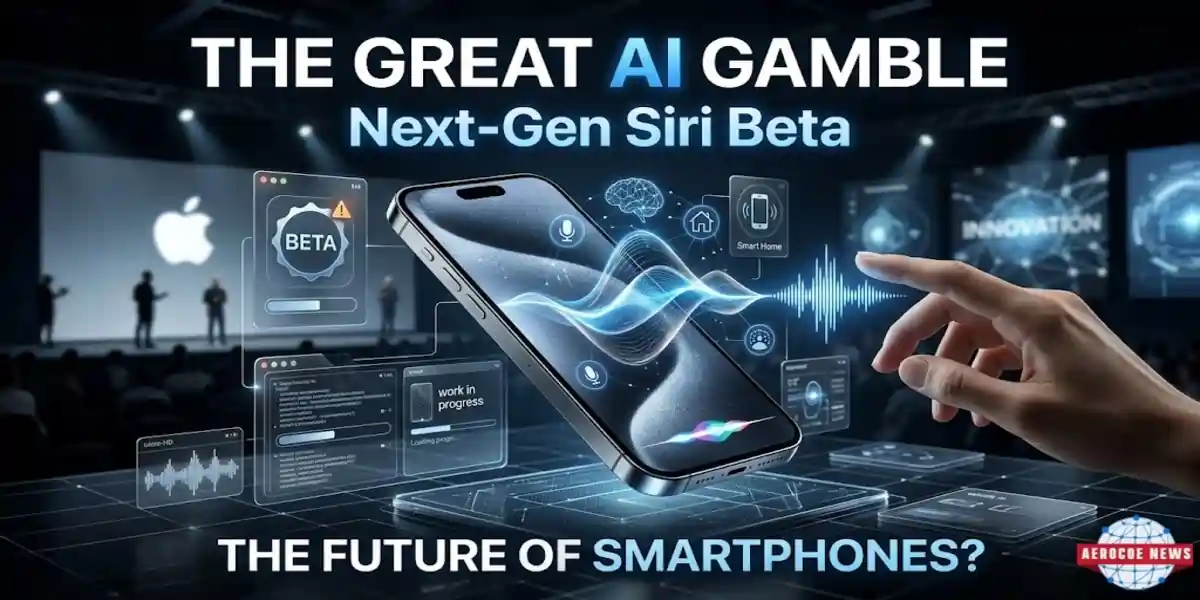
For the past few years, tech enthusiasts and casual consumers alike have noticed a glaring gap in the mobile evolution. While the Android ecosystem rapidly integrated generative artificial intelligence into every nook and cranny, Apple’s iconic voice assistant remained somewhat stuck in the past. If you own a modern Smart Phone, you know how indispensable a truly intelligent assistant can be. That is why the tech world is buzzing over the latest revelations regarding iOS 27.
Apple’s annual Worldwide Developers Conference (WWDC) keynote is officially set to take place on June 8, 2026. While the event will showcase a variety of software updates across Apple’s ecosystem, the absolute headline act will be the complete and total overhaul of Siri. Driven by advanced Large Language Models (LLMs), this update promises to redefine how users interact with their handheld devices. However, a fascinating new report has revealed a surprising strategic twist: Apple is heavily considering launching this highly anticipated AI upgrade with a “beta” tag attached, despite the project already running two years behind its internal schedule.
This deep dive explores the engineering challenges, the consumer-facing features, and the corporate chess moves behind Apple’s upcoming AI transformation.
1. The Behind-the-Scenes Hurdle: Why the “Beta” Tag Matters
Launching a flagship feature as a beta might seem like a minor technical detail, but in the corporate world of premium consumer electronics, it is a massive safety net. Internal testers working closely with early development builds of iOS 27 have reportedly flagged serious concerns regarding the consistency and accuracy of the new LLM powering the assistant.
Developing an on-device AI model that is both lightning-fast and incredibly precise is an immense challenge for any modern Smart Phone manufacturer. When an AI system operates on massive data sets, it is prone to two primary issues:
- Hallucinations: The AI confidently invents facts, misinterprets user context, or delivers completely incorrect answers.
- Processing Lag: Unlike traditional command-based systems that respond instantly, complex LLMs require significant processing power, which can lead to noticeable delays during casual conversations.
By intentionally utilizing the beta label, Apple creates a critical psychological buffer against initial user frustration. If the revamped Siri makes a mistake or hesitates before answering a prompt, the consumer is much more forgiving because the software is explicitly marked as a work in progress. It is a calculated move to protect corporate reputation while gathering millions of real-world data points to refine the algorithm.
2. Siri as the Central Interface: The Multimodal AI Orchestrator
One of the most radical shifts coming to iOS 27 is how the operating system handles deep cognitive requests. Instead of trying to build an in-house model that can do absolutely everything perfectly, Apple is designing Siri to act as an intelligent traffic controller.
When you ask your Smart Phone to handle everyday tasks—like setting a reminder, sending a text, or checking your calendar—Siri will process the request locally on the device using Apple’s proprietary, privacy-focused models. However, when you throw a heavy creative writing task, a complex coding problem, or an intricate image generation prompt at it, Siri will seamlessly hand off the request to specialized external engines.
To make this ecosystem fair and highly customizable, iOS 27 will introduce a specialized AI choice menu. This settings panel will allow users to decide exactly which third-party engine handles their complex requests. Major players, including Google Gemini, are slated to be integrated directly into this choice architecture. This collaborative approach ensures that your device always uses the absolute best tool for the job without forcing you into a single cloud ecosystem.
3. The Emergency Escape Hatch: Prioritizing User Control and Privacy
As artificial intelligence becomes deeply woven into our daily digital lives, a growing segment of the population is expressing worry over data privacy and feature creep. Apple has built a massive portion of its brand identity on user privacy, and iOS 27 aims to respect that legacy by providing a literal exit strategy from the AI era.
The system settings within the new update will feature a dedicated toggle switch that acts as an emergency escape hatch. If a user feels uncomfortable with an unpredictable LLM monitoring their contextual habits, or if they simply find the new system too complex, they can opt out completely with a single tap.
Enabling this toggle immediately strips away the generative AI layer and reverts the system entirely back to the classic, command-based Siri. This ensures that traditional users who prefer simple, predictable voice actions can continue using their Smart Phone exactly the way they always have, maintaining absolute peace of mind.
4. Real-Time Vision: Exploring the New “Camera Siri Mode”
Beyond voice processing, the upgrade brings stunning visual capabilities directly into the default camera application. Dubbed “Siri Mode,” this feature morphs the camera lens into an active, analytical eye that interprets the physical world in real time.
Imagine traveling in a foreign country or navigating an unfamiliar neighborhood. With Siri Mode active, you can simply point your device at a physical object to receive instant information.
- Menu Reading & Nutritional Guidance: Scan complex restaurant menus to see ingredient breakdowns or explanations of foreign dishes.
- Live Translation: Instantly translate physical signs, flyers, or documents from one language to another directly on your viewfinder.
- Object Identification: Point the camera at an unknown plant, a passing car, or a historic building to receive an instant, accurate summary of what you are looking at.
This integration bridges the gap between digital convenience and physical reality, turning your everyday mobile device into a powerful augmented-reality assistant.
5. Creative Enhancements: Genmoji Blending and Advanced Photo Tools
The underlying intelligence of iOS 27 also leaks into user expression and media editing. The update introduces a highly sophisticated feature known as Genmoji blending. This allows users to merge different emoji concepts on the fly, creating entirely unique, personalized digital expressions via natural language descriptions.
Furthermore, the native Photos app is getting a massive upgrade through automated editing utilities called “Extend” and “Reframe”.
- The Extend Tool: Uses generative fill technology to intelligently guess and draw what the background would look like beyond the original borders of a cropped photograph.
- The Reframe Tool: Analyzes the subjects inside a photo and automatically repositions the frame to apply classic photographic principles, such as the rule of thirds, making casual snapshots look professionally shot.
6. Competitive Landscape: Apple vs. The Premium Android Market
This massive overhaul completely resets the playing field in the ultra-competitive premium mobile market. For the past two years, competing brands have used advanced AI ecosystems as their primary selling point. Apple’s upcoming beta release is an aggressive attempt to reclaim dominance in the innovation narrative.
| Feature Area | Legacy Siri Architecture | Next-Gen iOS 27 Siri (Beta) | Typical Android AI Competitors |
| Core Engine | Rule-based, pre-programmed commands | Advanced Large Language Model (LLM) | Custom Gemini / Proprietary LLMs |
| Complex Task Handling | Fails or opens basic web search links | Routes to external engines (e.g., Gemini) | Relies entirely on cloud partner systems |
| Camera Integration | None (Requires separate apps) | Real-time object and text translation | Google Lens / Integrated visual search |
| User Autonomy | Always on by default | Full opt-out toggle to legacy mode | Hard to disable completely without losing system features |
Conclusion
Apple’s decision to attach a beta tag to its highly anticipated Siri upgrade is a brilliant balance of engineering humility and marketing genius. After two years of internal delays, the company cannot afford to sit on the sidelines any longer. By launching the system as a beta on June 8, Apple satisfies the immense consumer demand for next-generation intelligence while protecting its premium brand from the inevitable growing pains of early-stage generative AI.
Whether you love the relentless march of technology or prefer simple, command-based utility, this upcoming update ensures that your favorite Smart Phone remains highly flexible, incredibly secure, and tailored explicitly to your comfort level. It is a new chapter in mobile computation, and the entire world will be watching when the WWDC stage lights turn on.
Are you excited to test out the new AI-powered Siri features, or will you be utilizing the opt-out switch to keep things classic? Let us know your thoughts in the comments section below!
Frequently Asked Questions (FAQs)
Q1: Which devices will support the new AI Siri features in iOS 27?
While full device compatibility will be confirmed at WWDC on June 8, internal leaks suggest the heavy hardware demands of on-device LLMs will limit the full local experience to recent flagship models, such as the upcoming iPhone 18 series and the iPhone Air 2.
Q2: Will using third-party engines like Google Gemini compromise my personal data?
Apple has designed the system architecture to act as a secure proxy. Whenever Siri routes a complex prompt to an external engine like Gemini, your personal identifiers are stripped away, meaning the third-party model only receives the raw prompt without knowing who sent it.
Q3: Can I use the Camera app’s Siri Mode without an active internet connection?
Basic tasks like real-time sign translation and menu reading for major languages will utilize small, efficient on-device models that work completely offline. However, deep object identification and contextual web lookups will require cellular data or a Wi-Fi connection.
Q4: How long is the Siri AI upgrade expected to remain in the “beta” phase?
Given the unpredictable nature of natural language processing and the strict accuracy standards Apple maintains, industry experts predict the beta tag will remain active through several point-releases, likely dropping the label by early 2027.
Q5: What happens if I choose to use the emergency opt-out toggle?
If you choose to opt out of the advanced assistant, your device will immediately stop running the background LLMs for voice synthesis. Siri will function exactly like it did in older iOS versions, responding only to specific, pre-programmed voice commands.
Expert Guide Question: Do you believe that allowing third-party AI models like Google Gemini into the core of iOS is a sign of Apple conceding the AI race, or is it a masterful display of open-ecosystem collaboration? Share your take below.

Anushka is an automotive writer with three years of experience creating reviews, features, and technical guides. Passionate about cars, she translates complex engineering details into engaging, reader-friendly content. Covering market trends, safety innovations, and electric-vehicle advancements, Anushka delivers insightful, trustworthy articles that fuel readers’ passion for the open road.