
The Indian sustainable mobility ecosystem is experiencing an unprecedented shift, and Tata Motors continues to lead this green transition from the front. As clean energy vehicles transition from a luxury niche to mainstream consumer choices, the homegrown manufacturer is solidifying its dominance in the electric vehicle market. The brand’s proactive product strategy has already reshaped the passenger car landscape, and the upcoming festive season is set to bring an even larger wave of innovation to the Indian Automobile sector.
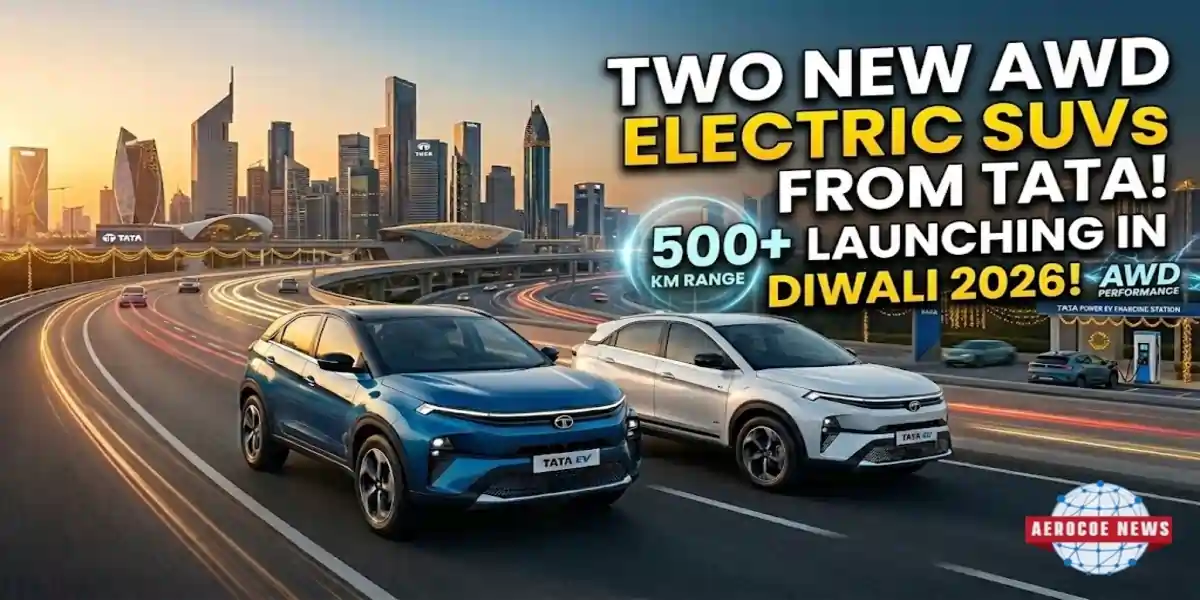
Following the successful rollout of its updated entry-level models, including the refreshed Tiago and Tiago EV, Tata Motors is shifting its focus to premium, high-performance segments. Car enthusiasts and green mobility advocates have a lot to look forward to, as the legendary Tata Sierra EV is officially scheduled to make its market debut on June 30, 2026. This highly anticipated release will be quickly followed by the launch of the flagship Tata Safari EV, which is confirmed to arrive just in time for the Diwali 2026 festive rush. Both vehicles represent a major milestone for Indian engineering, merging extreme driving capability with zero-emission technology.
The Power of All-Wheel Drive (AWD) in the Indian EV Segment
What makes this dual launch incredibly significant for the premium lifestyle segment is the official confirmation of an advanced All-Wheel Drive (AWD) system. Traditionally, standard electric vehicles in India have relied on either Front-Wheel Drive (FWD) or Rear-Wheel Drive (RWD) setups to maximize basic energy efficiency. However, Tata Motors is deliberately targeting adventure enthusiasts and luxury buyers by introducing dual-motor configurations designed to handle tough driving conditions.
An intelligent AWD drivetrain plays a critical role in optimizing power distribution across both axles. By continuously monitoring traction levels at each individual wheel, the vehicle’s central computer can instantly divert torque to the tires with the most grip. This translates to vastly improved acceleration from a complete standstill, superior stability through sharp highway corners, and confident off-road performance over loose gravel, mud, or rain-slicked tarmac. For family buyers looking at large multi-purpose vehicles, these enhancements elevate safety and driving dynamics to international standards.
Under the Hood: Shared High-Performance Powertrain Architecture
While the official individual specifications for the production-spec Sierra EV and Safari EV will be revealed closer to their respective launch dates, industrial intelligence confirms that both vehicles will share a highly modular powertrain architecture. To optimize production costs and ensure proven reliability, Tata Motors is utilizing the robust battery and motor setups originally engineered for the premium Harrier EV.
According to standard manufacturing parameters, buyers will be able to choose between a standard 65kWh battery pack and a long-range 75kWh battery variant. The structural packaging allows for two distinct mechanical configurations:
- Single-Motor Variants (RWD): Tuned for urban commuting and maximum energy conservation, producing a balanced 238PS of maximum power and a robust 315Nm of peak torque.
- Dual-Motor Variants (AWD): Reserved exclusively for the higher-end luxury trims, combining an extra motor on the front axle to produce a breathtaking 396PS of power and an incredible 504Nm of instant torque.

Eliminating Range Anxiety: 500+ KM on a Single Charge
For a long time, the primary hurdle stopping mainstream buyers from migrating to the electric ecosystem was range anxiety—the fear of getting stranded on long highway journeys away from city centers. Tata Motors is addressing this head-on by aiming for real-world usability that easily matches traditional internal combustion engines.
Thanks to advanced battery chemistry and smart thermal management systems, both the Sierra EV and Safari EV are projected to comfortably deliver a certified driving range of well over 500 kilometers on a single charge. To put this into perspective, their platform sibling, the Harrier EV, achieves an official certified range of 538km with the 65kWh pack, which stretches up to an impressive 627km on the single-motor 75kWh variant. Even when configured with the heavier dual-motor AWD system, the platform manages a reassuring 622km range. This ensures that weekend intercity road trips can be completed easily without requiring frequent charging breaks.
Next-Generation Charging: Support for V2L and V2V Smart Grid Tech
When you do need to replenish the battery, both SUVs will come fully equipped with high-capacity DC fast charging capabilities. This allows drivers to add hundreds of kilometers of range in less than thirty minutes at public highway charging stations. Additionally, Tata Motors is embedding cutting-edge bi-directional charging technology into these premium models, elevating them from mere transportation tools into mobile energy hubs.
The inclusion of Vehicle-to-Load (V2L) and Vehicle-to-Vehicle (V2V) functionalities opens up a world of practical possibilities. With V2L, the car acts as a giant power bank, allowing users to plug in standard household appliances, camping gear, laptops, or power tools directly into the vehicle during outdoor excursions or residential power outages. The even more advanced V2V technology allows a Tata EV owner to safely rescue a stranded electric vehicle by transferring emergency charge directly from one car to another, fostering a collaborative, community-driven ecosystem on Indian roads.
EV-Specific Design Language: Blending Tradition with Modernity
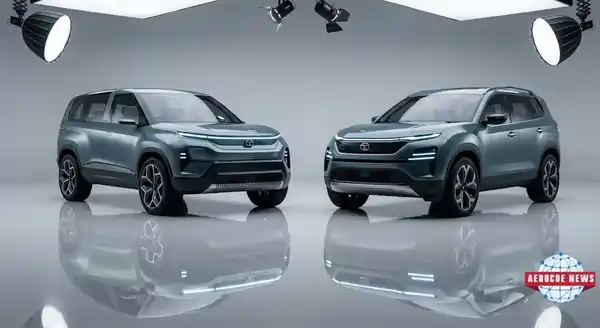
Visually, both the Sierra EV and Safari EV will retain the imposing, muscular proportions and authoritative road presence that have made their traditional combustion-engine (ICE) siblings incredibly popular across the country. However, the design team has introduced several distinct, futuristic visual elements that immediately signal their eco-friendly, high-tech identity.
The most prominent update is the adoption of a completely sealed-off front grille panel, finished in premium body color or contrasting piano black, which reduces aerodynamic drag since electric motors don’t require the massive cooling airflow of a traditional radiator. The front and rear bumpers have been reprofiled with clean, minimalistic lines to cleanly channel air around the vehicle body. Furthermore, the SUVs will ride on newly designed, aero-optimized alloy wheels featuring integrated inserts that prevent turbulent air from trapping inside the wheel wells, directly contributing to those impressive 500+ km range figures. Subtle, premium EV badging and signature full-width sequential LED light bars complete the sophisticated look.

How This Launch Impacts the Indian Luxury SUV Market
The arrival of the Sierra EV and Safari EV by Diwali 2026 is set to create intense competition within the premium automotive market. For years, buyers looking for large, luxurious, and capable all-wheel-drive SUVs had to look almost exclusively at expensive premium European imports. By offering world-class safety features, long-range capabilities, and intelligent AWD performance at a more accessible price point, Tata Motors is democratizing premium electric mobility.
This move will likely force competing manufacturers to accelerate their own localized EV development plans, which will benefit the consumer by expanding choice and driving down prices across the industry. Furthermore, by breathing new life into the iconic ‘Sierra’ brand name with cutting-edge technology, Tata is perfectly balancing nostalgic emotional appeal with forward-thinking innovation, ensuring strong consumer interest right from day one.
Conclusion: A Green Festive Season Awaits Indian Car Buyers
Ultimately, Tata Motors’ upcoming product offensive represents a massive leap forward for the Indian Automobile sector. The combination of a generous 500+ km range, the untamed capability of an intelligent All-Wheel Drive system, and advanced features like bi-directional charging ensures that these vehicles are practical choices for long-term ownership.
As the June 30 launch of the Sierra EV approaches and production lines gear up for the Safari EV’s Diwali release, the future of premium Indian transport looks incredibly promising. If you are planning to upgrade your family garage this year, waiting for these climate-ready, high-performance electric SUVs might just be the smartest decision you make for your lifestyle and the planet.
What are your thoughts on Tata’s new AWD electric SUV strategy? Will the iconic Sierra EV or the flagship Safari EV be on your shopping list this festive season? Let us know your thoughts in the comment section below, and share this exciting automotive update with your friends!
Frequently Asked Questions (FAQs)
Q1: What is the main benefit of an AWD system in an electric SUV? An All-Wheel Drive (AWD) system utilizes dual electric motors to distribute power to all four wheels simultaneously. This provides vastly superior road grip, excellent stability on slippery surfaces, and improved off-road capability compared to standard two-wheel-drive setups.
Q2: How long does it take to charge the Tata Safari EV using a fast charger? While official charging times will be confirmed at launch, using a standard commercial DC fast charger is expected to replenish the 65kWh or 75kWh battery packs from 10% to 80% in approximately 30 to 40 minutes.
Q3: Can the Tata Sierra EV be used as a home backup power source during blackouts? Yes. Thanks to the integrated Vehicle-to-Load (V2L) technology, the car can comfortably supply power to standard electrical appliances, making it a highly reliable emergency backup system during power outages.
Q4: Will the electric versions of these SUVs have less cabin space than the diesel versions? No. Because Tata’s dedicated EV platforms place the battery packs flat underneath the floorboard, the interior cabin floor remains spacious and flat, often providing superior legroom and cargo capacity compared to traditional ICE models.
Q5: What is the expected warranty on the battery packs for these new models? Following industry standards set by previous premium launches, Tata Motors is expected to offer a reassuring high-mileage warranty of 8 years or 1,60,000 kilometers on both the liquid-cooled battery packs and the electric motors.
Expert Guide Question: With driving ranges now comfortably crossing the 500km threshold, do you believe public charging infrastructure remains the final hurdle for absolute EV adoption in India? Share your thoughts below.