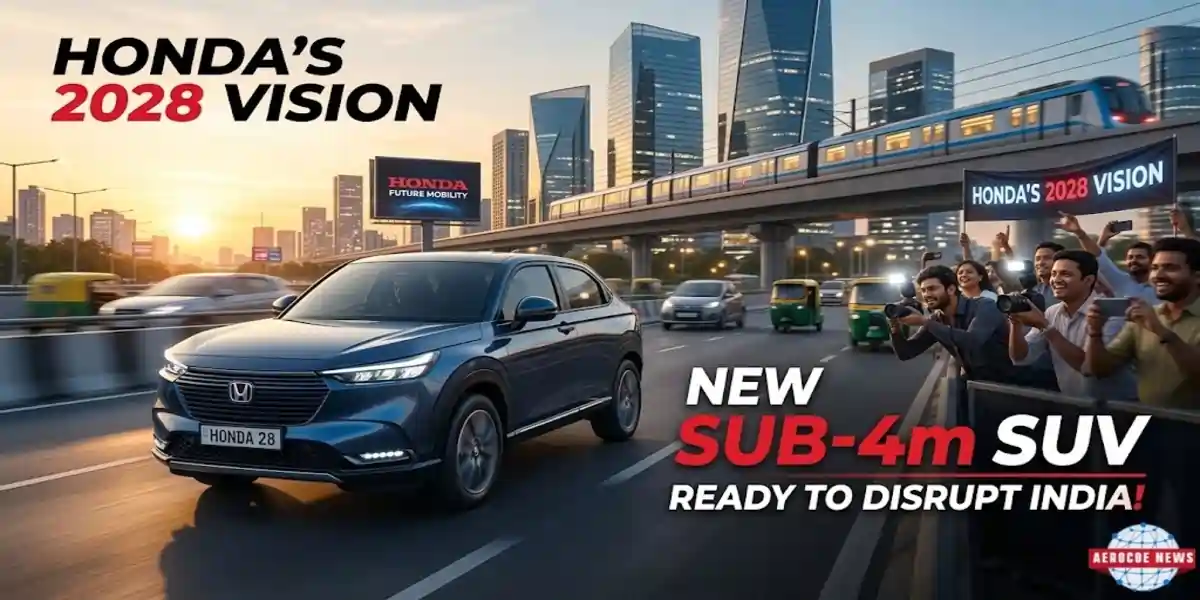
The Indian automobile landscape is about to witness a massive shift as the legendary Japanese manufacturer, Honda, has finally broken its silence on its future plans for the sub-4-meter SUV segment. For years, fans of the “H” badge have been waiting for a rugged, compact, and tech-loaded vehicle that can take the fight to established champions like the Maruti Suzuki Brezza and the Tata Nexon. In a recent global business briefing, Honda officially confirmed that it is developing a brand-new sub-4-meter SUV specifically for India, with a scheduled launch in 2028.
This announcement comes at a crucial time when the compact SUV segment has become the most profitable and high-volume category in the country. After the discontinuation of the Honda WR-V in 2023, the brand left a void that rivals quickly filled. Now, with a clear roadmap and a target audience that includes millions of two-wheeler upgraders, Honda is preparing a comeback that could redefine reliability and performance in the small SUV space.
Honda’s Strategic Re-entry: Why the 2028 Timeline Matters
The automobile industry is currently in a state of rapid transition. While some brands are rushing into the electric vehicle (EV) space, Honda is playing a calculated game of patience and precision. The 2028 timeline suggests that Honda is not just looking to launch another car but is building a platform that is “future-proof.”
By 2028, the Indian market will have evolved significantly in terms of emission norms, safety standards, and consumer tech expectations. Honda’s re-entry into this space nearly five years after the WR-V’s exit shows they are focused on getting the product right from the ground up. The WR-V was a cross-hatchback that won many hearts with its “Man Maximum, Machine Minimum” philosophy, but it eventually fell behind due to stricter BS6 Phase II norms and a lack of modern turbo-petrol options. The upcoming SUV is expected to rectify those shortcomings.
The Battle of the Titans: Rivaling Brezza, Nexon, and Venue
In the world of the Indian automobile, the sub-4-meter SUV category is a battlefield. To succeed, Honda’s new offering will have to outshine some very tough competitors:
- Maruti Suzuki Brezza: Known for its bulletproof reliability and high resale value.
- Tata Nexon: The darling of safety enthusiasts with its 5-star GNCAP rating and multiple powertrain options.
- Hyundai Venue & Kia Sonet: The tech kings that offer everything from ventilated seats to sophisticated dual-clutch transmissions.
- Mahindra XUV 3XO: The new power player with segment-first features like a panoramic sunroof.
Honda’s advantage has always been its engine refinement and interior packaging. If they can combine a “Mini-Elevate” design with a competitive price point, they could easily sway buyers who are tired of the current options.
What’s Under the Hood? Speculating on Performance
While detailed specifications remain under wraps, the automobile community is buzzing with speculation about what will power this new beast.
The 1.2-Litre i-VTEC Legacy
Currently, Honda uses its tried-and-tested 1.2-litre naturally aspirated petrol engine for the Amaze. It’s a smooth, fuel-efficient unit perfect for city driving. However, in an era where consumers want more “punch,” this engine might feel underwhelming compared to the turbocharged rivals.
The 1.0-Litre Turbo-Petrol Hope
Honda already has a potent 1.0-litre three-cylinder turbo-petrol engine that does wonders in the international markets for the Honda City and City Hatchback. This engine produces impressive torque and power, making it a perfect fit for a sporty compact SUV. Bringing this engine to India would be a massive statement of intent for the brand.
The Hybrid and EV Angle
By 2028, the push for green mobility will be stronger than ever. It wouldn’t be surprising if Honda introduces a strong hybrid version or even a pure electric variant shortly after the ICE launch. Honda’s e:HEV technology is world-class, and seeing it in a compact automobile would be a dream come true for fuel-efficiency seekers.
Targeting the Motorcycle to Car Upgrader
One of the most interesting parts of Honda’s briefing was their focus on their existing customer base. Honda is a giant in the Indian two-wheeler market, selling nearly six million motorcycles and scooters every year. They plan to increase this capacity to eight million units by 2028.
Honda realizes that a significant portion of these motorcycle owners will eventually want to upgrade to a four-wheeler. By offering a sub-4-meter SUV that is aspirational yet affordable, Honda creates a “brand ecosystem” where a customer can move from an Activa or a Shine to a Honda SUV seamlessly. This strategy is genius for maintaining long-term brand loyalty within the automobile sector.
Anticipated Features: Setting New Standards
In today’s automobile market, a car is as much a digital device as it is a vehicle. To compete with the likes of Hyundai and Kia, Honda must load this SUV with premium features:
- Honda Sensing (ADAS): Bringing Level 2 ADAS to the sub-4m segment would be a huge safety win.
- A Modern Infotainment Hub: A 10-inch plus touchscreen with wireless Apple CarPlay and Android Auto is now a non-negotiable.
- Sunroof: Given Indian buyers’ obsession with sunroofs, Honda will likely offer a large electric sunroof, if not a panoramic one.
- Premium Cabin Materials: Honda is known for its “soft-touch” feel and ivory-themed interiors, which give a sense of luxury that many rivals lack.
Interior Space: The Honda Way
Honda’s “Man Maximum, Machine Minimum” philosophy is legendary. Even in a small automobile, Honda usually manages to carve out more legroom and boot space than its competitors. We expect this new SUV to feature “Magic Seats” (like the old Jazz) or at least highly versatile 60:40 split folding seats to maximize utility for small Indian families.
Why Honda’s Expansion is Good for the Economy
Beyond just a new car launch, Honda’s commitment to India signifies growth for the entire automobile ecosystem. Increasing production capacity involves:
- Job Creation: Thousands of new jobs in manufacturing, sales, and service.
- Ancillary Growth: Boost to local spare part manufacturers and logistics companies.
- Technological Transfer: Introduction of global manufacturing standards and eco-friendly technologies to Indian shores.
Conclusion: Is the Wait Worth It?
The year 2028 might seem far away, but in the world of the automobile, it’s just around the corner. Honda is a brand built on trust, durability, and engineering excellence. While they might be late to the compact SUV party, their history suggests that they prefer to enter late with a superior product rather than rush in with a compromised one.
For the Indian consumer, this means more choice and better quality. Whether you are a loyal Honda fan or a first-time car buyer looking for an upgrade from your bike, this new sub-4m SUV is definitely a vehicle to keep on your radar.
What do you think about Honda’s decision to enter the sub-4m SUV segment in 2028? Is it too late, or is the wait worth it for Honda’s reliability? Let us know your thoughts in the comments below!
Frequently Asked Questions (FAQs)
1. When is the Honda sub-4m SUV launching in India?
Honda has officially confirmed that the new sub-4-meter SUV is planned for a launch in the year 2028.
2. Which cars will the new Honda SUV compete with?
It will primarily rival the Maruti Suzuki Brezza, Tata Nexon, Hyundai Venue, Kia Sonet, and Mahindra XUV 3XO in the Indian automobile market.
3. Will the new Honda SUV have a diesel engine?
It is highly unlikely. Honda has shifted its focus away from diesel in India, opting for refined petrol engines and potentially hybrid or electric powertrains.
4. How will it be positioned compared to the Honda Elevate?
The new sub-4m SUV will sit below the Honda Elevate in the brand’s lineup, making it more affordable and targeted at a wider audience.
5. Why is Honda waiting until 2028?
Honda is focusing on a long-term strategy that includes expanding production capacity and developing a platform that meets the future technological and environmental standards of the Indian automobile sector.
Expert Guide Question: Are you planning to upgrade from a motorcycle to a car in the next few years, and would a brand like Honda be your first choice due to its reliable automobile history?

Anushka is an automotive writer with three years of experience creating reviews, features, and technical guides. Passionate about cars, she translates complex engineering details into engaging, reader-friendly content. Covering market trends, safety innovations, and electric-vehicle advancements, Anushka delivers insightful, trustworthy articles that fuel readers’ passion for the open road.