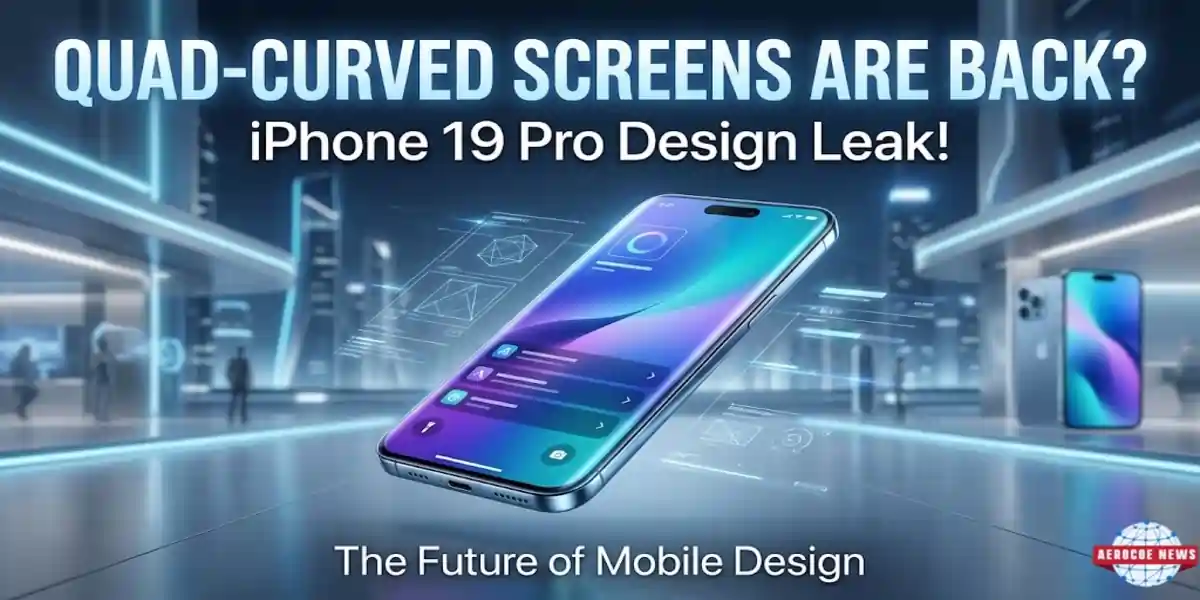
In the rapidly evolving world of mobile technology, the design of a Smart Phone is often the first thing that captures our imagination. For several years, the industry has seen a push toward flatter, more industrial aesthetics, with Apple leading the charge. However, whispers from the supply chain suggest that the tide is turning. If the latest rumors from reliable leakers are to be believed, the upcoming iPhone 19 Pro might be testing a radical new display technology: the quad-curved screen.
This potential shift marks a significant departure from the current flat-edge design language that has defined Apple’s premium lineup. For tech enthusiasts and casual users alike, the quad-curved display promises a more immersive, seamless experience. But beyond just aesthetics, what does this mean for the future of the Smart Phone market? In this deep dive, we explore why Apple might be revisiting this technology and how it could shape the landscape of mobile devices heading into 2027.
A Blast from the Past: The Rise and Fall of Curved Displays
Before we look forward to the iPhone 19 Pro, it is worth remembering the history of display curves. A few years ago, “waterfall” and quad-curved displays were the hallmark of premium Android flagships. Manufacturers experimented with glass that spilled over all four sides, creating an illusion of a screen that had no borders.
However, many of these devices faced criticism for accidental touches and fragility. Consequently, the industry shifted back to the flatter, more practical designs we see today. Now, with Apple rumored to re-adopt this aesthetic, it seems we are about to see a “full circle” moment in Smart Phone engineering.
What Makes the iPhone 19 Pro Quad-Curved Design So Unique?
According to leaks from Digital Chat Station on Weibo, Apple’s prototypes for the iPhone 19 Pro and Pro Max are currently being put through their paces with displays that curve on every edge. This isn’t just a slight rounding of the glass; it is a fundamental redesign of how the display meets the frame.
- Seamless Immersion: A quad-curved screen would essentially eliminate the visible bezel on the sides, top, and bottom, creating a “glass slab” effect.
- Tactile Ergonomics: Curvature on all four sides often makes a Smart Phone feel thinner and more comfortable to hold, potentially softening the sharp edges that users have become accustomed to with the iPhone 12 through current models.
- Advanced Glass Engineering: To pull this off, Apple would need to master even more complex glass-bending techniques, likely pushing the boundaries of what is possible in mass-produced mobile hardware.
The 20th Anniversary Factor: Redefining the iPhone Identity
The year 2027 marks the 20th anniversary of the original iPhone, which revolutionized the world of the Smart Phone in 2007. Because this is such a major milestone, industry insiders speculate that Apple won’t just release a standard “iPhone 19.”
There is a high probability that Apple may drop the “19” naming convention in favor of something more commemorative. Whether it’s an “iPhone X Anniversary Edition” or simply a “new iPhone Pro,” the design language of the iPhone 19 Pro prototypes strongly suggests that Apple wants to make a statement. A quad-curved display would be a bold, futuristic exclamation point on two decades of design evolution.
Impact on the Broader Smart Phone Market
One of the most fascinating aspects of Apple’s design choices is their ripple effect. Even though quad-curved screens were once an Android trend, most Android manufacturers eventually pivoted to flat displays to mimic Apple’s “Pro” aesthetic.
If the iPhone 19 Pro launches with quad-curved glass, we should expect an immediate “echo” effect. By late 2027 and throughout 2028, Android OEMs will almost certainly rush to re-introduce curved panels. This is the “Apple Effect”—the industry often waits for Cupertino to validate a design choice before it becomes a standard feature across the global Smart Phone market.
The Technical Challenges Apple Must Overcome
While the aesthetic appeal of a quad-curved Smart Phone is undeniable, the engineering reality is far more difficult. Apple has always prioritized durability, and all-glass edges are inherently more prone to cracking upon impact.
- Durability: Apple will likely need to employ a new generation of “Ceramic Shield” or reinforced glass alloys to ensure the curved edges can survive daily wear and tear.
- Palm Rejection: Software optimization will be critical. The iOS interface must become significantly smarter at distinguishing between a deliberate swipe and an accidental palm touch on the curved edge.
- Repairability: A quad-curved display usually complicates the manufacturing process, making repairs more expensive and complex for consumers.
What Can Users Expect from the iPhone 19 Pro Series?
Beyond the display, the iPhone 19 Pro will likely continue to push the envelope in several other categories that define a premium Smart Phone:
- Camera Innovation: Expect further integration of AI into the photography stack, perhaps even utilizing the extra screen space for real-time camera controls.
- Under-Display Tech: With the screen wrapping further around the edges, the pressure to hide sensors like Face ID or front-facing cameras completely under the display will increase.
- Performance: By 2027, the A-series chips will likely be pushing the limits of 2nm process technology, ensuring that the Smart Phone handles multitasking and gaming with unprecedented efficiency.
Why Consumers Should Be Excited
For the average user, the iPhone 19 Pro represents a move away from the “boxy” design era. While the flat edges have served a purpose for battery space and internal component packing, they haven’t been the most comfortable to hold for extended periods.
A move toward a quad-curved Smart Phone design suggests that Apple is prioritizing the “feel” of the device again. In an era where every phone looks identical from the front, a distinct curve could be the feature that finally makes the new iPhone feel truly “new” again.
The Future of Smart Phone Displays
As we approach the 20-year milestone of the iPhone, it is clear that the “flat screen” era may be coming to a close. Whether or not Apple decides to move forward with the quad-curved design in the final production units, the fact that they are testing it proves that they are looking for ways to revitalize the Smart Phone form factor.
We are entering a phase where the screen is no longer just a window; it is becoming the frame itself. If Apple can solve the durability and software challenges associated with curved glass, the iPhone 19 Pro could become the blueprint for every other mobile device to follow for the next decade.
Conclusion
The rumors surrounding the iPhone 19 Pro quad-curved display are more than just gossip; they are a glimpse into the future of Smart Phone design. As we celebrate 20 years of the iPhone, Apple appears ready to trade the flat-edged stability of the past for a bold, immersive, and highly ergonomic future.
While we must wait for more concrete leaks as the 2027 launch approaches, one thing is certain: the industry is watching. If Apple makes this move, the entire smartphone world will follow. Will you be upgrading to a quad-curved display, or do you prefer the reliable feel of a flat-screened Smart Phone? Let us know your thoughts in the comments below!
Frequently Asked Questions (FAQ)
1. What is a quad-curved screen?
A quad-curved screen is a display that wraps around all four sides of the device—top, bottom, left, and right—minimizing visible bezels and creating a seamless, glass-like appearance.
2. When will the iPhone 19 Pro be released?
If Apple follows its traditional release schedule, the iPhone 19 series (or its 20th-anniversary equivalent) is expected to be announced in September 2027.
3. Are quad-curved screens fragile?
Historically, curved glass edges have been more susceptible to cracking when dropped. However, Apple would likely use advanced glass-strengthening technology to mitigate this risk for its next-generation Smart Phone.
4. Why is Apple considering this design change?
After years of flat-edged designs, Apple may be looking to differentiate its devices visually and improve the ergonomic feel of its premium Smart Phone lineup to celebrate its 20-year history.
5. Will this design increase the cost of the iPhone?
Manufacturing a quad-curved glass panel is significantly more expensive and complex than producing flat glass. This could potentially influence the pricing of the Pro and Pro Max models.

Anushka is an automotive writer with three years of experience creating reviews, features, and technical guides. Passionate about cars, she translates complex engineering details into engaging, reader-friendly content. Covering market trends, safety innovations, and electric-vehicle advancements, Anushka delivers insightful, trustworthy articles that fuel readers’ passion for the open road.