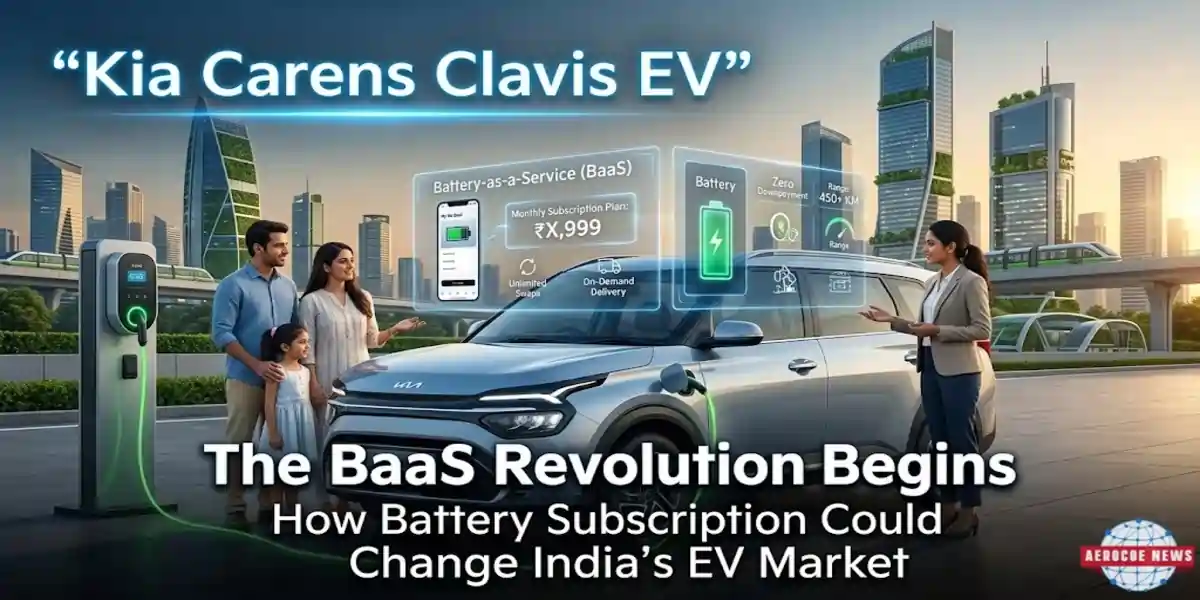
The Indian Automobile industry is currently witnessing a tectonic shift toward electrification. While the intent to “go green” is at an all-time high, the primary hurdle for the average consumer has remained the high upfront cost of electric vehicles (EVs). Most of that cost is tucked away in the battery—the heart and the most expensive component of any EV. To dismantle this barrier, Kia India has recently introduced a disruptive financing strategy for its first made-in-India electric car: the Kia Carens Clavis EV.
By introducing the Battery-as-a-Service (BaaS) model, Kia is essentially changing the DNA of how we purchase cars. Instead of paying for the whole car at once, you pay for the “shell” of the vehicle and subscribe to the battery, much like you would for a streaming service or a monthly data plan. In this comprehensive guide, we will break down the costs, the technology, and the long-term economics of the Kia Carens Clavis EV to see if it truly is the game-changer the Indian Automobile sector has been waiting for.
What is Battery-as-a-Service (BaaS)?
Before we dive into the numbers, it is crucial to understand what BaaS actually means for the modern Automobile buyer. In a traditional purchase, you own the car and the battery. In a BaaS model, the carmaker (or a financing partner) retains ownership of the battery, and you “rent” its usage.
This separation serves two purposes:
- Lower Entry Price: It brings the sticker price of an EV down to the level of a traditional petrol or diesel car.
- Risk Mitigation: The consumer no longer worries about battery degradation or the massive cost of battery replacement after 8–10 years, as the battery is essentially under a continuous service contract.
Financial Breakdown: The Kia Carens Clavis EV Price List
Kia has been very strategic with the pricing of the Carens Clavis EV. By partnering with major financial heavyweights like ICICI Bank, HDFC Bank, Axis Bank, Kotak Mahindra Bank, and Bajaj Finserv, they have ensured that the loan structures are as flexible as possible.
The Pricing Table: Standard vs. BaaS
| Model Variant | Ex-Showroom Price (Full) | BaaS Chassis Price | Monthly EMI (Starting) |
| Standard Version | ₹17,99,000 | ₹12,84,000 | ₹26,650 |
| Extended Range | ₹21,99,000 | ₹15,94,000 | ₹33,099 |
As seen in the table above, the BaaS model slashes nearly ₹5.15 lakh off the upfront cost of the vehicle. This is a significant delta that could allow a buyer who was previously looking at a sub-compact SUV to now consider a premium, 7-seater electric MPV.
The “Pay-per-KM” Cost
The cornerstone of the BaaS model is the subscription fee. For the Kia Carens Clavis EV, this is set at:
₹3.3 per kilometre.
If you drive an average of 1,000 km a month, your battery subscription would cost you ₹3,300. When you add this to the cost of electricity for home charging, the running cost still remains significantly lower than that of a fossil-fuel-powered vehicle in the current Automobile landscape.
Technical Specifications: Power and Performance
The Kia Carens Clavis EV isn’t just about clever financing; it is a robust piece of engineering designed specifically for Indian road conditions. As Kia’s first “Made-in-India” EV, it balances family utility with electric punch.
Battery and Range Options
Kia offers two distinct battery packs to cater to different types of drivers:
- 42 kWh Battery Pack: Aimed at urban commuters, this pack offers an ARAI-certified range of 404 km. It is paired with a 99 kW motor.
- 51.4 kWh Battery Pack: For those who frequently take highway trips, this pack delivers a more substantial 490 km range, powered by a 126 kW motor.
Performance Figures
- Torque: Both variants produce a healthy 255 Nm of peak torque, ensuring that the MPV feels brisk even when fully loaded with passengers.
- Drivetrain: The motor setup is optimized for efficiency without sacrificing the smooth, silent acceleration that EV enthusiasts love.
Flexible Financing: The Two-Loan Strategy
One of the most unique aspects of Kia’s BaaS programme is the dual-loan structure. This is a relatively new concept in the Indian Automobile market.
- Vehicle Body Loan: This covers the chassis and the interior. It can be financed for up to 60 months (5 years).
- Battery Component Loan: Because the battery is a high-value item with a different lifecycle, Kia allows this to be financed separately for up to 96 months (8 years).
By stretching the battery loan to 8 years, Kia ensures that the monthly outgo (EMI + Subscription) remains manageable for the middle-class Indian family. It also aligns the loan period with the typical warranty period offered on EV batteries, providing peace of mind to the owner.
Charging Infrastructure: The K-Charge Platform
The biggest fear for any EV owner in the Automobile world is “range anxiety.” Kia addresses this through its integrated K-Charge platform, accessible via the MyKia app.
Features of K-Charge:
- Widespread Access: Users get access to over 15,000 charging points across India.
- Live Tracking: You can check the real-time availability of chargers, preventing the frustration of arriving at a station only to find it occupied.
- Route Planning: The app helps you plan long-distance journeys by suggesting the most efficient charging stops based on your battery level.
- Integrated Payments: No need to download ten different apps for ten different charging vendors. Everything is handled within the MyKia ecosystem.
Economics: BaaS vs. Petrol/Diesel MPVs
Let’s look at the math. A typical petrol MPV in this segment might give you a mileage of 12 km/l. With petrol prices at roughly ₹100/litre, your fuel cost is approximately ₹8.3 per km.
With the Kia Carens Clavis EV under BaaS:
- Battery Subscription: ₹3.3/km
- Charging Cost (approx.): ₹1.0/km
- Total Running Cost: ₹4.3 per km
You are essentially saving ₹4 per km. Over a 1,00,000 km lifecycle, that is a saving of ₹4,00,000. When you factor in the lower maintenance costs of an EV (no oil changes, no exhaust repairs), the Automobile value proposition becomes even stronger.
Why the Indian Automobile Market Needs This
The Indian market is price-sensitive. By bringing the “shell” price down to ₹12.84 lakh, Kia is competing directly with top-end variants of cars like the Maruti Suzuki XL6 or the Hyundai Alcazar. It allows consumers to enjoy the luxury and tech of a premium EV without the “sticker shock” of a ₹20 lakh+ price tag.
Furthermore, BaaS helps stabilize the resale value. One of the reasons people hesitate to buy used EVs is the uncertainty of the battery’s health. In the BaaS model, the battery is under a permanent service umbrella, making the vehicle much easier to sell in the second-hand Automobile market.
Is the Kia Carens Clavis EV Right for You?
Choosing a car in the modern Automobile era is no longer just about the color or the sunroof. It’s about the usage pattern.
You should consider the BaaS model if:
- You have a high monthly running (over 1,500 km).
- You want a premium EV but have a budget of around ₹13–15 lakh.
- You are worried about long-term battery health and replacement costs.
You might prefer the standard purchase if:
- You plan to keep the car for a very long time and don’t want a permanent monthly subscription.
- Your monthly mileage is extremely low, making the “per km” fee less economical than an upfront payment.
The Road Ahead for Kia India
The Carens Clavis EV is just the beginning. By manufacturing this vehicle in India, Kia is positioning itself as a leader in the localized EV Automobile space. This move not only supports the “Vocal for Local” initiative but also ensures that spare parts and service remain affordable.
With its sleek design, industry-first safety features, and now a revolutionary financing model, the Carens Clavis EV is set to challenge the status quo. It tells the consumer: “You don’t need to be a millionaire to drive the future; you just need a smart subscription.”
Frequently Asked Questions (FAQs)
1. What happens if I want to sell the car under the BaaS model?
The BaaS contract is transferable. The new buyer will simply take over the battery subscription and the remaining EMI for the vehicle body. It works similarly to how a home loan is transferred during a property sale in the Automobile financing world.
2. Is there a minimum monthly mileage requirement for the ₹3.3/km charge?
Usually, BaaS providers have a minimum billing cycle (e.g., 1,000 km/month), but Kia’s specific partners may offer flexible tiers depending on your usage. It is best to check with the dealer at the time of financing.
3. Does the BaaS price include charging costs?
No. The ₹3.3 per km is only the subscription for the battery hardware. The cost of electricity (at home or at a public station) is separate. However, the savings on “fuel” still remain substantial compared to internal combustion engines.
4. Can I switch from BaaS to full ownership later?
Most BaaS programmes allow a “buyout” option where you can pay the depreciated value of the battery and end the subscription. This offers a great deal of flexibility if your financial situation changes.
Conclusion
The Kia Carens Clavis EV with BaaS is a bold experiment in the Indian Automobile sector. It successfully bridges the gap between high-tech aspiration and middle-class reality. By offering a range of up to 490 km and a starting chassis price of ₹12.84 lakh, Kia has essentially thrown down the gauntlet to other manufacturers.
Whether this becomes the standard way we buy cars remains to be seen, but for now, it provides a much-needed breath of fresh air for those looking to switch to green mobility without breaking the bank.
Expert Guide Question: With the BaaS model effectively lowering the barrier to entry, do you think other major players in the Indian Automobile market will be forced to abandon traditional sales models in favor of “Vehicle-as-a-Service”?

Ashish Rai is a professional automotive writer with four years of experience crafting reviews, features, and technical guides. Passionate about vehicles, he translates complex engineering concepts into engaging content. Covering market trends, EV developments, and driving experiences, Ashish delivers insightful, reader-friendly articles that ignite automotive enthusiasm worldwide consistently with integrity.