The Indian Automobile landscape is going through a structural evolution, driven by a fast-growing consumer appetite for premium multi-row utility vehicles that blend efficiency with luxury. Modern car buyers are looking beyond entry-level commuters and mid-size family cars. Instead, they are prioritizing larger vehicles that offer environmental sustainability without sacrificing raw highway performance. In response to these changing dynamics, South Korean auto giant Kia has officially drawn up an aggressive product expansion roadmap designed to capture a major share of the premium family car space over the next four years.
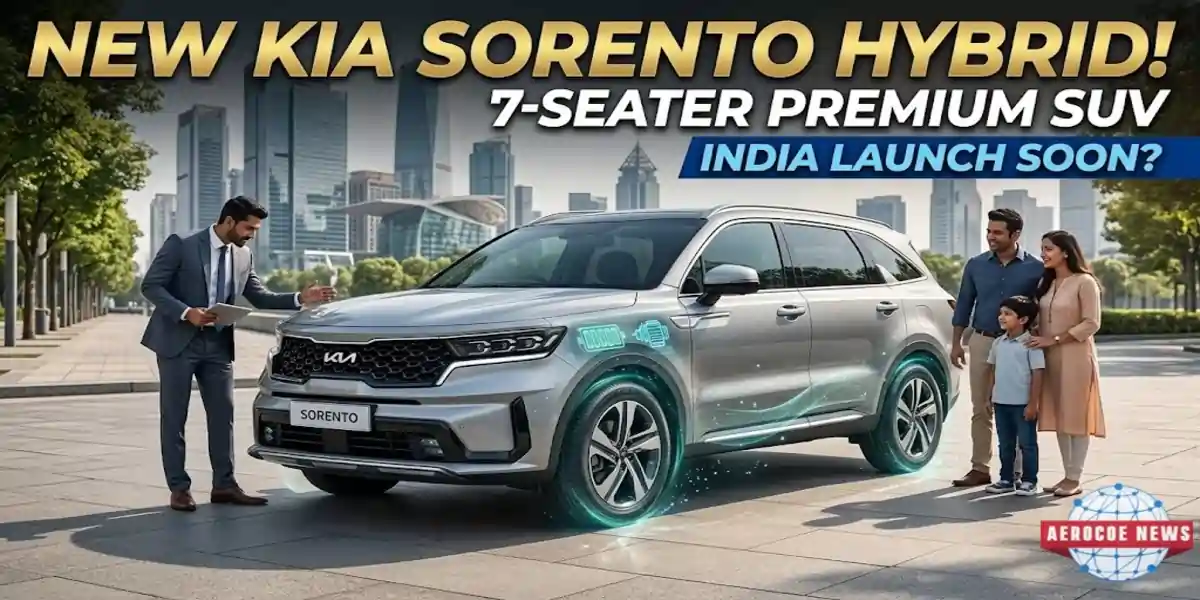
At its recent 2026 Kia CEO Investor Day, the automaker announced an ambitious plan to grow its local vehicle portfolio to 10 distinct models by the year 2030. Rather than focusing purely on standard internal combustion engines, Kia’s upcoming line-up will feature eight highly advanced electrified models. This lineup includes the compact Syros EV, the premium Carnival hybrid, and the highly anticipated Kia Sorento 7-Seater Hybrid SUV. For families seeking a massive upgrade in cabin comfort and fuel economy, the Sorento represents a fresh landmark in green engineering.
Kia’s Strategic Leap: The Electrification Roadmap Revealed
To understand why the Sorento Hybrid is such an essential addition to the changing Indian car market, one must look closely at how Kia plans to phase in its green technologies. The manufacturer is avoiding a one-size-fits-all approach to zero-emission and low-emission mobility. Instead, they are introducing a balanced mix of pure battery electric vehicles (BEVs) and highly efficient strong hybrid electric vehicles (HEVs) tailored to different price categories.
According to corporate production timelines, the mass-market rollout begins with the Kia Syros EV, which is scheduled to hit local showrooms in August 2026. This will be followed closely by the public debut of the premium Sorento Hybrid SUV in late 2026, with an official commercial launch and customer deliveries beginning in early 2027. Fans of ultra-luxury multi-row travel will have to wait a bit longer for the Carnival Hybrid, which is projected to arrive between 2028 and 2029. This rolling schedule ensures that Kia covers every major price point in the premium segment.
Competitive Market Placement: Who Will the Sorento Fight?
When the three-row Kia Sorento Hybrid officially lands in the Indian market, it will occupy a premium spot positioned right above the popular Seltos in the brand’s local product hierarchy. This means the SUV will enter a highly competitive and profitable segment, directly challenging established mid-to-high-end family cars.
The Sorento will go head-to-head with dominant segment leaders like the Mahindra XUV 7XO, the Tata Safari, and the MG Hector Plus. Additionally, it will have to fend off a wave of next-generation 7-seater hybrid utility vehicles being co-developed by automakers like Maruti Suzuki, Toyota, Renault, and Nissan. By bringing advanced parallel hybrid technology to a segment traditionally dominated by heavy, polluting diesel engines, Kia aims to offer a refined and eco-friendly option that sets a new standard for modern family transport.

Local Assembly Strategy: Keeping Luxury Pricing Competitive
One of the biggest hurdles that global vehicle manufacturers face when launching large premium models in India is the steep tax structure applied to imported vehicles. To keep the Sorento’s price accessible to mainstream luxury buyers, Kia is implementing a smart local manufacturing strategy at its advanced industrial facility in Anantapur, Andhra Pradesh.
Instead of importing completely built vehicles, Kia plans to bring the Sorento in via the Completely Knocked Down (CKD) kit route. This parts-import method drastically reduces customs duties, allowing the company to target a highly competitive introductory price bracket of Rs 30 lakh to Rs 35 lakh (ex-showroom). To make this operation financially viable, Kia is setting up local assembly lines to produce nearly 50,000 units of the hybrid SUV annually. This production volume will comfortably serve both growing domestic demand and high-volume export markets across the globe.
Under the Hood: Exploring the Hybrid Powertrain Options
The mechanical core of the India-bound Kia Sorento Hybrid is being engineered to strike an optimized balance between immediate torque delivery and long-range fuel savings. This balance is critical for managing unpredictable highway traffic and dense urban gridlock.
The Indian-Spec 1.5L Petrol Hybrid (Codenamed MQ4i)
Codenamed MQ4i, the Indian-spec version of this 7-seater family vehicle is widely reported to feature an all-new 1.5-liter petrol hybrid powertrain setup. This intelligent engine configuration is being designed to pull double duty across Kia’s local portfolio, and it is expected to power future high-end variants of the next-generation Seltos as well. By using a highly efficient 1.5-liter motor coupled with an electric drive unit, the Sorento will capture lost braking energy, storing it in a lithium-ion battery pack to deliver seamless stop-go electric commuting without needing a plug.
The Global 1.6L Turbocharged Direct-Injection Engine
In international markets, the Kia Sorento features a slightly different, high-performance 1.6-liter, 4-cylinder turbocharged direct-injection (T-GDI) petrol engine mated to a strong electric motor. This system is paired with a heavy-duty 6-speed automatic torque converter transmission, pushing out excellent horsepower while keeping fuel consumption down. While the local 1.5L hybrid will focus primarily on delivering best-in-class fuel economy, Kia’s engineering department is ensuring the vehicle retains plenty of highway overtaking power, giving driving enthusiasts complete confidence.
Aesthetic Grandeur: Distinctive Design and Road Presence
Recent spy images of heavily camouflaged test mules navigating public roads reveal that the Indian-spec Sorento will retain the muscular design language of its global counterpart. This bold design approach gives the vehicle a highly commanding and premium look on the road.
The front of the SUV is defined by Kia’s iconic, wider ‘Tiger Nose’ radiator grille, which blends into vertically stacked multi-element LED headlamps featuring distinctive T-shaped LED daytime running lights (DRLs). The lower front bumper sports a rugged air intake layout designed to maximize aerodynamic cooling efficiency. Moving to the side profile, the Sorento features massive 19-inch diamond-cut alloy wheels, thick protective body cladding, and flush roof rails. The rear design rounds out the rugged look with split vertical LED tail lamps and a clean, muscular tailgate that emphasizes its wide stance.

Why Strong Hy Hybrids are the Sweet Spot for Indian Families
As the local automotive market moves through a transitional phase between fossil fuels and clean energy, strong hybrids are emerging as the most practical choice for long-distance family travel. While full electric vehicles work beautifully for predictable city commutes, many long-distance travelers still worry about a lack of fast-charging infrastructure along major inter-state highways.
Strong hybrid systems solve this issue by offering the best of both worlds. At lower city speeds, the Sorento can operate almost entirely on silent battery power, using zero fuel in heavy rush-hour traffic. When you accelerate onto open highways, the petrol engine kicks in smoothly, working alongside the electric motor to optimize fuel consumption. This intelligent setup eliminates range anxiety entirely while delivering fuel economy figures that rival or beat small hatchbacks, saving families money on every long road trip.
Interior Luxury, Technology, and Flexible Seating Configurations
Inside the cabin, the Sorento is designed to look and feel like a true luxury family vehicle. The multi-row layout uses premium, soft-touch materials, custom leatherette upholstery, and a clean dashboard design centered around a massive dual-screen infotainment setup.
- Generous Third-Row Accessibility: The second row features a simple, one-touch tumble mechanism, providing effortless entry and exit for passengers using the rearmost seats.
- Dual-Pane Panoramic Sunroof: This premium feature extends over the first two rows, filling the entire cabin with natural light and creating an open, airy feel.
- Multi-Zone Intelligent Climate Control: Dedicated roof-mounted AC vents and independent blower controls for all three rows ensure every passenger stays comfortable during peak Indian summers.
Advanced Safety Frameworks and ADAS Integration
Safety remains a top priority for premium family buyers, and Kia is equipping the Sorento with an advanced suite of active and passive driver safeguards. The structure uses high-tensile thermal-stamped steel alloys to maximize cabin integrity during severe impacts.
The standout safety highlight is the inclusion of a full Level 2 Advanced Driver Assistance Systems (ADAS) hardware suite. This intelligent tech network uses radar sensors and high-resolution cameras to provide essential safety features like autonomous emergency braking, blind-spot monitoring, adaptive cruise control with stop-go functionality, lane-keeping assist, and rear cross-traffic collision avoidance. These systems work quietly in the background, significantly reducing driver fatigue during long, exhausting holiday road trips.
Conclusion: Setting the Stage for a Premium Family Era
The upcoming launch of the Kia Sorento 7-Seater Hybrid SUV marks a major milestone for India’s premium vehicle segment. By assembling the SUV locally at its Anantapur plant, Kia is making luxury engineering available at an incredibly competitive price point. This model bridges the gap between old internal combustion options and full EVs, offering large families a practical, reliable, and fuel-efficient alternative.
With its striking design, tech-loaded interior, and advanced safety features, the Sorento is well-positioned to shake up the premium mid-size class when it hits showrooms in early 2027. It proves that a spacious family vehicle can look elegant, drive beautifully, and treat the environment with respect.
Are you ready to make the switch to a hybrid family mover? Will you wait for the late 2026 debut of the Kia Sorento, or does a pure electric SUV align better with your lifestyle? Let us know your thoughts in the comment section below! Don’t forget to share this article with fellow car enthusiasts across your social circles.
Frequently Asked Questions (FAQs)
Q1: Does the upcoming Kia Sorento Hybrid require an external charging plug? No, the Kia Sorento features a self-charging strong hybrid system. It automatically recharges its internal lithium-ion battery pack by capturing kinetic energy during braking and using power from the petrol engine, so you never need to plug it into a wall outlet.
Q2: What is the expected launch timeline for the Kia Sorento in India? The premium 7-seater hybrid SUV is scheduled to make its official public debut in late 2026, with commercial price announcements and customer deliveries beginning in early 2027.
Q3: How will Kia keep the Sorento’s price competitive against local rivals? Kia plans to assemble the Sorento locally using Completely Knocked Down (CKD) kits at its advanced manufacturing plant in Anantapur. This approach bypasses high import duties, allowing them to target a competitive price range of Rs 30 lakh to Rs 35 lakh (ex-showroom).
Q4: What are the main design differences between the Indian and global Sorento? Spy shots show that the India-bound model will stay very close to the global version’s styling. It features the iconic ‘Tiger Nose’ front grille, vertical LED lighting elements, and a clean, muscular tailgate design.
Q5: Which vehicles will be the primary competitors for the Sorento Hybrid? The Sorento will compete directly with premium three-row vehicles like the Mahindra XUV 7XO, the Tata Safari, and the MG Hector Plus, as well as upcoming 7-seater hybrid models coming from Maruti Suzuki and Toyota.

Ashish Rai is a professional automotive writer with four years of experience crafting reviews, features, and technical guides. Passionate about vehicles, he translates complex engineering concepts into engaging content. Covering market trends, EV developments, and driving experiences, Ashish delivers insightful, reader-friendly articles that ignite automotive enthusiasm worldwide consistently with integrity.