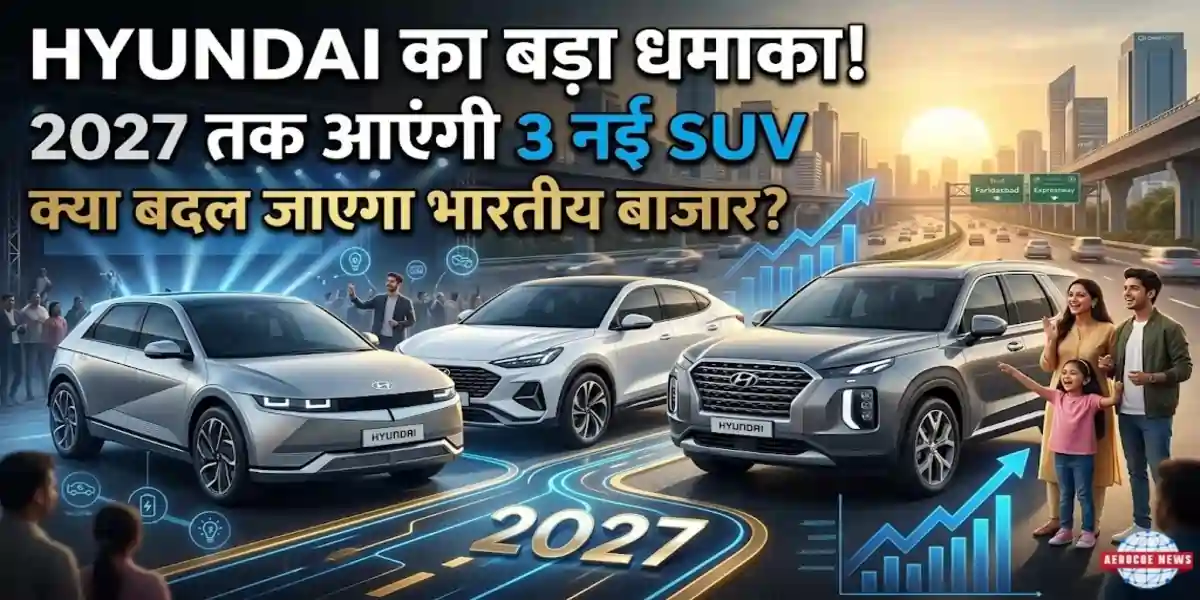

The Indian Automobile landscape is on the verge of a massive transformation. As consumer demand swings heavily toward high-performance, spacious, and environmentally responsible utility vehicles, top-tier automotive brands are restructuring their long-term portfolios. Leading this aggressive charge is the South Korean manufacturing giant, Hyundai Motor India. Recently, the automaker announced a monumental blueprint that outlines its path for the next few years, promising a staggering 26 new product launches by 2030.
This calculated product offensive is not just about expanding numbers; it represents a diversified engineering focus across multiple powertrain architectures. Hyundai is actively developing vehicles using traditional internal combustion engines (ICE), compressed natural gas (CNG), battery electric powertrains (BEVs), and, most notably, self-charging strong hybrids. By 2027, the company aims to dramatically reinforce its market share in the premium compact, midsize, and flagship three-row segments. If you are an auto enthusiast or looking to purchase a family vehicle, this detailed Automobile guide breaks down the three highly anticipated Hyundai SUVs confirmed to arrive by 2027.

1. The Brand New Sub-Compact SUV: Targeting Urban Commuters and Fierce Rivals
The first major weapon in Hyundai’s upcoming product offensive is a strategically developed sub-compact utility vehicle designed to fill a crucial gap in its domestic family lineup. Internally codenamed Bc4i, this upcoming vehicle is expected to draw heavy engineering and aesthetic inspiration from the Hyundai Bayon, an incredibly popular crossover currently enjoying immense commercial success across European markets. Within the brand’s local hierarchy, this fresh addition will be positioned cleanly above the sub-four-meter Venue and just below the dominant Creta midsize platform.
Measuring the Competitive Edge
Measuring approximately 4.18 meters in length, this upcoming crossover brings a commanding road presence while maintaining a nimble footprint suitable for navigating dense city environments. Hyundai’s strategic goal for the Bc4i platform is clear: to go head-to-head against established micro-hybrid premium hatchbacks and urban crossovers like the Maruti Suzuki Victoris.
To appeal to value-conscious family buyers, the automaker is expected to deploy a highly refined 1.2-liter naturally aspirated four-cylinder petrol engine. Furthermore, acknowledging the rapidly growing demand for low-emission alternative fuels in urban regions, Hyundai will offer a factory-fitted twin-cylinder CNG alternative right from its commercial launch. This dual-fuel approach ensures exceptional running costs without sacrificing critical luggage space in the rear trunk area.
2. The 2027 Next-Gen Hyundai Creta Hybrid: A New Technological Benchmark
No vehicle has shaped the midsize Indian Automobile landscape quite like the iconic Hyundai Creta. To maintain its undisputed dominance over fierce segment competitors, Hyundai is preparing to unleash the highly anticipated, third-generation iteration of this legendary vehicle in early 2027. This launch marks a major historic milestone for the brand, introducing its very first mass-market strong hybrid powertrain to domestic assembly lines.

Engineering on the Advanced K3 Architecture
The upcoming third-generation Creta will move away from its aging components to utilize the corporate group’s highly praised K3 modular platform. Early test mules and supply chain leaks suggest that the all-new model will feature a noticeably larger footprint. It will have a stretched wheelbase and wider tracks to unlock superior cabin legroom, enhanced shoulder space, and a more versatile boot layout.
Aesthetically, the 2027 Creta will drop its softer design curves in favor of a striking, razor-sharp geometric design language. This look is heavily inspired by the brand’s global flagships, such as the newly redesigned Santa Fe and Palisade. Key design updates include:
- A Parametric Jewel Grille: Integrated seamlessly with hidden H-shaped LED daytime running lamp signatures.
- An Ultra-Modern Cabin: Equipped with a unified dual 10.25-inch infotainment and instrument cluster screen setup.
- The Pleos Connect Ecosystem: An advanced telematics system offering deep cloud connectivity, remote vehicle diagnostics, and predictive voice command capabilities.
- Level 2 Advanced Driver Assistance Systems (ADAS): An updated safety suite featuring automated emergency braking, lane-keeping assistance, and adaptive stop-and-go cruise control.
The headline update for the 2027 update is the strong hybrid system. This setup couples an efficient petrol engine with a high-torque electric motor and a lithium-ion battery pack. Operating seamlessly between pure electric, hybrid, and engine-driven modes, the Creta Hybrid aims to deliver a class-leading fuel efficiency figure of over 22-25 km/l, rendering it immune to fluctuating fuel prices.
3. The New Flagship 3-Row 7-Seater SUV: Redefining Premium Family Travel
For large families demanding high luxury, great long-distance touring capabilities, and a commanding driving view, Hyundai is crafting an all-new flagship 7-seater SUV. Codenamed Ni1i, this vehicle will sit above the current Alcazar inside the lineup, functioning as a premium premium alternative designed to bridge the gap between mid-range options and luxury imports.
A Design Inspired by Global Success
According to internal component suppliers, the Ni1i platform will be structurally based on the Tucson Long Wheelbase (LWB) model, an extended luxury SUV that has seen massive success in international automotive markets like China. By using this longer platform, Hyundai ensures that third-row occupants enjoy genuine, long-distance comfort rather than cramped seating. The premium 7-seater is aimed at taking market share away from established heavyweight segment competitors, including the Mahindra XUV 7XO, Tata Safari, and MG Hector Plus.
Multi-Powertrain Versatility and the Talegaon Production Hub
To maximize market reach, the flagship Ni1i platform will offer a highly versatile selection of powertrains. Buyers can configure the vehicle with a high-torque turbo-diesel engine optimized for highway mile-munching, a refined turbo-petrol unit for smooth performance, or the company’s new strong hybrid setup. To keep production costs optimized and ensure competitive showroom pricing, Hyundai will use its newly acquired, state-of-the-art manufacturing facility in Talegaon, Maharashtra as the exclusive global production hub for this premium 7-seater asset.

Summary of Upcoming Hyundai SUV Specifications
To help you visualize how these future utility vehicles fit into your lifestyle and budget, here is a detailed breakdown of what to expect based on current engineering timelines:
| Feature / Metric | Sub-Compact SUV (Bc4i) | Creta Hybrid (Gen-3) | Flagship 7-Seater (Ni1i) |
| Expected Timeline | Late 2026 / Early 2027 | Early 2027 | Mid-to-Late 2027 |
| Primary Powertrain | 1.2L Petrol / Factory CNG | 1.5L Petrol Strong Hybrid | Petrol, Diesel & Strong Hybrid |
| Core Platform | European Crossover Base | Advanced K3 Architecture | Tucson LWB Derivative |
| Seating Configuration | 5-Seater Layout | 5-Seater Premium Layout | 6 & 7-Seater Options |
| Manufacturing Hub | Sriperumbudur, Tamil Nadu | Sriperumbudur, Tamil Nadu | Talegaon, Maharashtra |
| Primary Target Market | Budget Urban Commuters | Premium Tech-Savvy Families | Luxury Corporate/Family Buyers |
Conclusion: A Bold New Era for Indian Car Buyers
The roadmap ahead makes one thing abundantly clear: Hyundai is fully prepared to defend and expand its territory within the domestic market. By focusing on advanced modular platforms, striking global design aesthetics, and highly efficient strong hybrid powertrains, these three upcoming SUVs are set to raise the bar for what Indian car buyers can expect from a family vehicle.
From the urban-friendly Bc4i crossover to the technologically advanced third-generation Creta Hybrid and the grand Ni1i flagship 7-seater, Hyundai’s upcoming product lineup offers a compelling option for every budget and lifestyle. As these models transition from advanced development phases to final production lines, they will undoubtedly ignite intense competition across the entire Automobile landscape, giving consumers more power, choice, and efficiency than ever before.
Which of these three upcoming Hyundai SUVs are you most excited to see on Indian roads? Will you wait for the game-changing Creta Hybrid, or does the spacious premium 7-seater fit your family’s needs better? Let us know your thoughts in the comment section below, and remember to share this article with your fellow car enthusiasts!
Frequently Asked Questions (FAQs)
Q1: What are the main benefits of the upcoming Hyundai Creta Hybrid system?
The strong hybrid setup will allow the vehicle to run on pure electric power during low-speed city bumper-to-bumper commutes, drastically cutting down fuel use and delivering excellent real-world efficiency.
Q2: Will the new flagship 7-seater SUV replace the existing Hyundai Alcazar?
No, the upcoming Ni1i SUV will be positioned a step above the Alcazar in terms of pricing, interior luxury, and physical dimensions, competing directly with larger premium utility vehicles.
Q3: Why is Hyundai investing heavily in hybrid technology instead of going fully electric?
While electric vehicles are growing, strong hybrids act as a highly practical bridge for buyers who want excellent fuel economy and lower emissions without worrying about charging infrastructure on long road trips.
Q4: When will production officially begin at Hyundai’s new Talegaon facility?
The state-of-the-art Talegaon manufacturing plant is currently undergoing structural re-tooling and is on track to serve as the main manufacturing hub for upcoming premium models starting around 2026-2027.
Q5: Will the sub-compact Bc4i SUV be available with an automatic transmission?
Yes, keeping urban drivers in mind, Hyundai is highly likely to offer both a smooth intelligent manual transmission (iMT) and a convenient automatic gearbox option for its petrol variants.